The Man Who Got Russia Right
Washington has a long tradition of misreading Moscow. As Putin teeters, it’s worth recalling George Kennan, the best Kremlinologist America ever had.
BY SUSAN B. GLASSER | DECEMBER 23, 2011

"Urbi et Orbi" significa "a cidade e o mundo" em latim. Para nós, é um espaço privilegiado para a discussão das questões internacionais, em suas múltiplas e inesperadas dimensões. Aqui você terá análises de vários temas, divulgação de eventos e periódicos em RI e comentários sobre a profissão de analista internacional. Criado por e para estudantes de RI, este blog também está aberto a contribuições de especialistas de outras áreas e leigos que se interessem pelos estudos internacionais.

Russia spent £470m on foreign aid last year, the lowest of all the G8 nations. But its status as a 're-emerging donor' reveals its desire to maintain influence and rebuild its public image

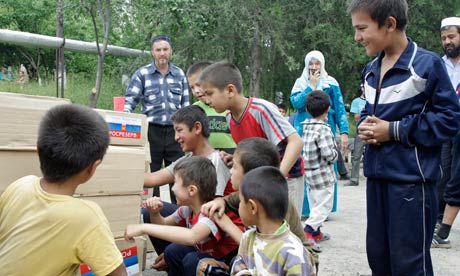
Russia spent $472.32m on foreign aid in 2010, according to the Russian ministry of finance's report released in advance of this week's G8 summit in Deauville, France.
The country's aid spending, according to the report, dropped from $785m in 2009 to $472.32m in 2010 – a decrease of 40%. However, Russia had only temporarily increased its aid budget in 2009 to soften the blow of the global financial and economic crises, particularly in the neighbouring former Soviet republics, the report says.
Though Russia has the smallest aid budget of the G8 bloc, it is often called a "re-emerging" donor. The Soviet Union provided massive amounts of aid for several decades during the Cold War – some $26bn in 1986 alone – but Russia became a net recipient of assistance in the 1990s after the fall of communism. Until last year, Russia was a recipient of UK aid.
A Russian government strategy paper, from 2007, about foreign aid policy set an annual spending target of $400-500m and talked about setting up a specialised government aid agency. "Present-day realities of global policy and economy and Russia's status of a superpower suggest that Russia could pursue a more active policy in international development assistance, including an increase in government spending for these purposes," it said. Emerging market rival Brazil already has its own aid agency and South Africa launches its development partnership agency this year.
Priorities for Russian overseas aid last year included food security and health programmes, with $98.2m for agricultural training and technology in African countries, and more than $80m on global health programmes in developing nations.
Unlike aid from many of the other large economies, most Russian development assistance is channeled through multilateral organisations, including the World Bank, the UN, and global initiatives to stimulate industry investment for vaccine research and development. More than 60% of Russian aid for global food security initiatives last year was channelled through multilateral organisations.
Russia has been up-front about the role it hopes its aid budget will play in maintaining its regional influence and rebuilding its public image. However, Andrei Bokarev, the head of international financial relations at the Finance Ministry, said in January that the government needs to do more to publicise Russia's aid programme because it doesn't get enough media coverage.
But as other G8 countries, including the US and Britain, struggle to make the case for development aid to a domestic public increasingly affected by budget cuts, Russia is experiencing its own special challenges, with one in eight Russians living below the official poverty line and millions unemployed.
"Russia is becoming a major provider of development assistance for low-income countries in the region," says the World Bank. "Yet development also remains a domestic imperative." In 2008, official poverty rates ranged from 38% in Kalmykia (in the south) to 7.4% in oil-rich Khanty-Mansiysk.
Despite the domestic problems, Russia has said the role of its foreign aid is to "strengthen the credibility of Russia and promote an unbiased attitude to the Russian Federation in the international community". A more consistent policy on international development would help strengthen its international position, said its 2007 strategy paper, and could spur Russia's domestic development by promoting trade and economic cooperation with countries that receive Russian aid. And, it added, a strong development policy could promote a "belt of good neighbourliness" along Russian borders and help address issues from drug trafficking to cross-border crime.
In response to the global financial and economic crises, Russia backed the creation of a multi-billion dollar crisis response fund to help struggling neighbours. Through the fund, Russia gave Tajikistan a $63m grant last year. And between 2006 and 2009, Russia put together a multi-million dollar package to develop health systems in neighbouring republics, in response to the threat of an influenza pandemic. More than 40 laboratory facilities in the region were re-fitted and upgraded, and 200 specialists were trained on influenza surveillance and response.
Last week, leading development charities accused the G8 of "cooking the books" in its annual accountability report, released in advance of the Deauville summit. The charities said the report covered up broken promises to the world's poor by ignoring the impact of inflation. But unlike other members of the G8 – the US, Britain, France, Germany, Japan, Italy and Canada – Russia did not make specific commitments for aid to Africa at the 2005 Gleneagles summit and does not submit its aid figures to the OECD, which monitors progress on aid pledges.
In 2007, Russia committed to the UN aid spending target of 0.7% of gross national income (GNI), though set no specific timeframe for meeting the target. If it had met the 0.7% target in 2009, Russia would have been the world's 6th largest aid donor, with a budget of $9.27bn.
Fonte: The Guardian

The military doctrine of a country is always a very important document, as it outlines and provides a measure of predictability to its security policy. In the case of Russia, where the security issues have historically had great influence in government decisions and in the very formation of Russia’s national identity, the study of the new Military Doctrine allows experts to become familiar with a very relevant aspect of the international insertion of Moscow. Based on the text of the Doctrine, this paper aims to highlight its most representative elements and analyze its possible impacts on Russian foreign policy and Moscow’s relations with its neighbors and major powers.
The Military Doctrine of 2010 [2] starts with general provisions which deal with the purposes of the Doctrine relating to the protection of Russia’s national interests of Russia and with the conceptualization of terms such as risk of war (voennaya opasnost’), military threat (voennaya ugroza), local war (lokal’naya voyna) and large-scale war (krupnomasshtabnaya voyna). The doctrine is divided into three sections: the dangers of war and military threats to the Russian Federation (Articles 7 to 16); military policy of the Russian Federation (Articles 17 to 37), and military and economic security of defense (Articles 38 to 53).
Elements
In the beginning of the section on the dangers of war and military threats to Russia, the Doctrine recognizes that the “[e]xisting architecture of international security, including its international legal mechanisms, does not provide equal security for all states” (Russian Federation 2010). This reveals the perception that, despite being well placed within the international security system, Russia estimates that such system provides even greater protection to other states.
The Doctrine recognizes the waning possibility of a large-scale war being waged against Russia, but notices the persistence of some sources of military threat to the country. The expansion of the North Atlantic Treaty Organization (NATO) towards Russian borders and the intention to give it global functions appears as the first item of the main external dangers of war to the country mentioned in the document. Another danger cited is the establishment of missile defense systems that “[...] undermine global stability and violate the balance of power [...]” (Russian Federation 2010), in a clear reference to the U.S. project of installing a missile defense system in Eastern Europe. Territorial claims against Russia are also evaluated as an external danger of war – here we can remember the Japanese claim on the Kuril Islands. International terrorism is another item quoted in the external dangers of war by the Doctrine.
The Doctrine demonstrates that Moscow will thoroughly monitor the military-strategic scenario in its Near Abroad. Several passages show that will be considered military dangers and threats to Russia the occurrence of the following situations in the territory of its neighbors: the deployment of military contingents belonging to states and organizations which are alien to the region; the use of military force in violation of international law; the escalation in armed conflicts; the activities of international armed radical groups; and the development of military exercises with provocative purposes.
The document recognizes the growing importance of high-precision weapons, information and control systems and robotics for the conduct of contemporary warfare, including through devices remotely controlled by humans. In this subject, it is worth remembering the Russian acquisition of Israeli-made unmanned aerial vehicles (UAV’s) in 2009, which demonstrates both the willingness of Moscow to modernize its armed forces and the inability of the Russian military-industrial complex to produce certain types of weapons required in the 21st century warfare.
In order to prevent conflicts, the Doctrine attaches great importance to the cooperation and coordination in security issues within the framework of the Collective Security Treaty Organization (CSTO), the Commonwealth of Independent States (CIS), the Organization for Security and Cooperation in Europe (OSCE) and the Shanghai Cooperation Organization (SCO). NATO was not cited in this part, receiving only a brief mention among the organizations with which Russia will seek to develop relationships.
Concerning the use of nuclear weapons, the Doctrine reserves the right of Russia to use them as a response to an attack with weapons of mass destruction (nuclear, chemical or bacteriological) against the country, as well as in the case of aggression with conventional weapons that threatens the very existence of the Russian state. Here, Moscow has adopted the first-use policy of nuclear weapons and adhered to the doctrine of preemptive nuclear strikes – even though the country has already begun pondering about it in the late 1990’s, after NATO’s intervention in Yugoslavia, when the military might of the Atlantic Alliance was greater than Russia’s (Kramnik 2009). According to Russian military commanders, the country will continue to develop and modernize its “nuclear triad”, consisting of land-based ballistic missile systems, nuclear submarines equipped with ballistic missiles and strategic bombers armed with nuclear warheads (RIA Novosti 2010).
However, further details on the Russian nuclear deterrence policy will only be known with the presentation of the Principles of State Nuclear Deterrence Policy to 2020, which were approved together with the Military Doctrine, but have not been released to the public yet.
The Doctrine envisages the use of Russian Armed Forces abroad to protect the interests of Russia and its citizens, among other things, in accordance with international law and Russian federal legislation. In addition, the document ascribes the protection of citizens of the Russian Federation living abroad against armed attacks directed at them as one of the tasks of the Armed Forces in peacetime. As Western analysts suspect, these provisions may give room for a stronger interventionism of the Kremlin in the domestic affairs of states in its Near Abroad – such as Belarus, Kazakhstan and Ukraine – on the pretext of protecting Russian minorities living in these countries. Indeed, the protection of Russian populations was one of the reasons for Moscow’s military intervention in the August War against Georgia in 2008.
The text also delegates to the Armed Forces the task of combating piracy and ensuring the safety of navigation. In fact, this provision is not more than an acknowledgement of the participation of the Russian Navy in suppressing the activities of Somali pirates in the Gulf of Aden, by sending a task force of three warships from its Pacific fleet to the region in 2009 (RIA Novosti 2009).
Regarding the organization of the military, the Doctrine aims to transform the Armed Forces in a more efficient and mobile force by optimizing the structures of the three armed branches (Air Force, Army and Navy) and independent troops (airborne troops, space and strategic missile forces), with the use of combined arms units performing similar tasks (RIA Novosti 2010).
In the third section of the document, military and economic security of the defense, great attention is paid to economic and social sustainability of the apparatus of national defense and the role of the military-industrial complex in this matter. After all, putting the recent history of Russia in perspective, one can point to the hypertrophy of the military apparatus as one of the decisive causes for the demise of the Soviet experience.
One of the tasks assigned to the military-industrial complex is “[...] to ensure a strategic presence of Russia on the world market of high-technology products and services” (Russian Federation 2010). In fact, the country has managed to maintain a privileged position in the global arms market, accounting for about 25% of all exports in the sector between 2004 and 2008 – in 2007, Russia exported as much as US$ 7.4 billion in defense equipment (SIPRI 2009).
One of the goals of the military-industrial complex is to improve the system of intergovernmental cooperation in the military field. In this subject, it is worth citing the already extensive military cooperation between Russia and India – whose most prominent project is the development of fifth-generation fighter for the Air Forces of the two countries (Sukhoi/HAL FGFA).
Another objective assigned to the military-industrial complex is to ensure Russia’s technological independence in the development of weapons of strategic importance. However, the recent purchases of the French-made Mistral helicopter carrier and of the aforementioned Israeli-made UAV’s show that Russia will have to overcome obstacles of financial and technical nature in order to fully achieve this objective.
The preservation of state control over the organizations of strategic importance within the military-industrial complex is also a goal mentioned in the Doctrine. In fact, this proposal aims to consolidate the measures taken by former President Vladimir Putin related to the defense industry, with the monopoly on exports of Russian arms granted to the state enterprise Rosoboroneksport and the merger of all Russian aerospace industries under a single cluster (United Aircraft Corporation).
The Doctrine cites the progress on negotiations for the establishment of regional security systems as one of the tasks of Russia in the field of political-military cooperation. Here, we can see Moscow’s interest in deepening regional collective security arrangements under the CSTO and the SCO frameworks, as well as an desire to establish the pan-European Treaty of European Security, which has faced a cool reception in Western Europe.
Doctrine’s articles 50 and 51 regarding the tasks and the main priorities of the political-military cooperation clearly show the Russian perception of “concentric circles” of alliances around them (Belarus, CSTO, CIS and CST):
(i) the closest one, with Belarus, involves the coordination in the development of the national armed forces and the use of military infrastructure;
(ii) within the CSTO, aims to the creation of a collective force to ensure common defense;
(iii) within the CIS, seeks to guarantee regional security and to conduct peace operations, and
(iv) within the SCO, recommends the coordination of efforts against possible security threats to the common area and the creation of a legal basis for the organization.
The final clause of the Doctrine states that its content can be corrected due to changes in the character of military threats to Russia and to the conditions of the country’s development. This prediction of adaptability to the Doctrine demonstrates that the Russian authorities responsible for the document are sensitive to the dynamic changes in the nature of contemporary military conflicts, in which the classic conventional war between states coexists with the fourth generation of wars involving non-state actors.
The innovations of the Military Doctrine of 2010 compared to its predecessor were the explicit identification of threats – particularly the placement of NATO as the first in the list of major external dangers of war – and allies, the provision ascribing the right to use troops abroad to protect Russian citizens and the inclusion of the fight against piracy on the list of tasks of the Russian Armed Forces (Saradzhyan 2010).
Conclusion
A document as fundamental as this has two facets: orientation of the Armed Forces in the domestic stage and foreign consumption. It is important to remember that the text of the Doctrine is full of messages carefully targeted to specific audiences (states, organizations etc.). First, the very date of its publication (February 5) is quite symbolic, as it coincided with the beginning of the 46th Munich Security Conference, dedicated to the future of international and European security (Russia Today 2010). Throughout the text, there are frequent references to cooperation with the CSTO, the SCO and the CIS – organizations where Moscow’s influence is considerable – while passages on the rapprochement with NATO are much more scarce. This inspired the reaction of Christopher Bryant (Bryant 2010), the British minister for European Affairs, who said that:
NATO has no intent against Russia. I don’t think any Russian soldier has been involved or will be involved in any action against NATO, whereas, you know, Russians have died from international terrorism. There have been many incidents in the last few years. So, I would challenge Russia and say: no, you are wrong on this.
For Marcel de Haas (de Haas 2010), the explicit reference to NATO’s expansion as a threat and the implicit reference to the missile shield the United States plans to install in Eastern Europe are all running against the core of Obama’s “reset policy” (perezagruska) toward Russia. For de Haas and Richard Weitz (Weitz 2010), the references to NATO show that the new Doctrine reaffirms old Cold War values. This arguments, however, lacks substance since Russia only makes such references to the Atlantic Alliance because it is reacting to a concrete geopolitical situation in which NATO – certainly a product of the Cold War – is approaching its military infrastructure toward Russia’s borders, causing concern in the Kremlin. If NATO’s rhetoric is of partnership and mutual trust with Russia, how to justify its expansion to the East, causing annoyance to its Russian counterparts?
According to the military commentator Ilya Kramnik (Kramnik 2009), the new Doctrine reflects the gradual movement of Russia toward Western standards of military force employment and the abandonment of the ideological aspects that made up the military doctrine of the Soviet Union.
The more assertive content of the Doctrine must be understood as a product of the process of Russia’s resurgence as a power with global reach, characterized by a foreign policy more affirmative of Russian national interests, the recovery of its economy and higher spending on the defense sector – there are plans to increase the current budget of US$ 40 billion by 50% over the next three years (RIA Novosti 2010). The increase in military spending is much more an intention to resume investments in the Russian military infrastructure, which was abandoned in the 1990s, than a movement of militarization for the adoption of interventionist and expansionist policies in the international stage, as argued by some analysts.
Moreover, the content of the Doctrine can also be seen as a post facto legitimization of Russia’s role in the August War against Georgia in 2008 and of other initiatives adopted by Moscow in the field of international security in the period between 2000 and 2010.
Bruno Quadros e Quadros is a student of International Relations at Centro Universitário Curitiba (UniCuritiba), Brazil
—
NOTES
[1] Hereinafter referred to as “Military Doctrine” or “Doctrine”.
[2] The analysis was based on the original document in Russian and English translations were made freely by the author. Since references to the content of the Military Doctrine are very frequent in this paper, we will only write references in parentheses (in the Chicago format) in cases of direct quote from the original text of the Doctrine.
REFERENCES
Bryant, Christopher. “Our intent towards Russia is entirely peaceful”. Interfax. 17 Feb 2010. http://www.interfax-news.com/interview.asp?id=147631 (accessed Feb 20, 2010).
de Haas, Marcel. “Cold War Military Doctrine.” The Moscow Times. 11 Feb 2010. http://www.themoscowtimes.com/opinion/article/cold-war-military-doctrine/399496.html (accessed Feb 21, 2010).
Russian Federation. “Voennaya doktrina Rossiyskoy Federatsii” [“Military Doctrine of the Russian Federation”], 2010. Moscow, 2010.
Kramnik, Ilya. “Who should fear Russia’s new military doctrine?”. RIA Novosti. 23 Oct 2009. http://en.rian.ru/analysis/20091023/156567212.html (accessed Feb 20, 2010).
RIA Novosti. “Russian warships sail to Horn of Africa on anti-piracy mission”. RIA Novosti. 29 Mar 2009. http://en.rian.ru/russia/20090329/120789018.html (accessed Feb 21, 2010).
RIA Novosti. “Russian president approves new military doctrine”. RIA Novosti. 05 Feb 2010. http://en.rian.ru/mlitary_news/20100205/157785368.html (accessed Feb 20, 2010).
Russia Today. “Russia’s new military doctrine approved”. Russia Today. 05 Feb 2010. http://rt.com/Politics/2010-02-05/russia-military-doctrine-approved.html (accessed Feb 21, 2010).
Saradzhyan, Simon. “Nuclear ‘Constraint’ in Russia”. International Relations and Security Network (ISN). 16 Feb 2010. http://www.isn.ethz.ch/isn/Current-Affairs/Security-Watch/Detail/?lng=en&id=112745 (accessed Feb 20, 2010).
SIPRI. 2009. SIPRI Yearbook 2009: Armaments, Disarmament and International Security. Stockholm: SIPRI. http://www.sipri.org/yearbook/2009/files/SIPRIYB09summary.pdf.
Weitz, Richard. “Global Insights: Russia’s New Military Doctrine reaffirms Old Values”. World Politics Review. 09 Feb 2010. http://www.worldpoliticsreview.com/article.aspx?id=5094 (accessed Feb 21, 2010).
Source: e-International Relations.